

Imagine waking up with boundless energy and a clear mind every morning. Starting a journey toward a healthier lifestyle might feel daunting at first. However, the rewards are truly life-changing for your daily happiness and well-being.
It is about much more than just numbers on a scale. It is about feeling strong and capable every single day. Achieving a successful body transformation requires patience and a positive mindset.
When you commit to moving your physique forward, you unlock potential you never knew existed. This path helps you build lasting confidence while improving your long-term health in various ways. You deserve to see what you can achieve with a little effort.
Embarking on a fitness transformation allows you to rediscover what your self is truly capable of doing. You deserve to feel your absolute best in every situation. Small changes lead to massive results over time when you stay focused on your goals.
Key Takeaways
- Consistency is the primary key to seeing real, lasting results.
- Mental health is just as important as your physical gains.
- Small daily habits lead to significant long-term changes over time.
- Focus on non-scale victories like improved sleep and mood.
- Nutrient-dense foods provide the necessary fuel for your progress.
- Having a strong support system significantly boosts your motivation levels.
1. What a True Body Transformation Looks Like
Transforming your body goes beyond the scale, involving a comprehensive overhaul of your physical strength, mental resilience, and emotional stability. As Arnold Schwarzenegger once said,
“The last three or four reps is what makes the muscle grow. This area of pain divides a champion from someone who is not a champion.”
This quote encapsulates the essence of a true body transformation.
More Than Just Losing Weight
Weight loss is often the most noticeable aspect of body transformation, but it’s only one part of the equation. A true transformation involves a combination of losing fat, gaining muscle, and improving overall health. It’s about becoming a healthier, more energetic version of yourself.
Physical Strength and Functional Fitness
Physical strength is a critical component of body transformation. It’s not just about lifting heavier weights; it’s about improving functional fitness that makes daily activities easier and reduces the risk of injury. Incorporating strength training into your routine can significantly enhance your metabolism and overall physical capability.
The Mental and Emotional Benefits
A body transformation also has profound mental and emotional benefits. Regular exercise and a balanced diet can improve mental health by reducing stress, anxiety, and depression. As you achieve your physical goals, you’ll likely experience a boost in confidence and a more positive body image.
2. Setting Your Body Transformation Goals for Success
A well-planned fitness goal is the foundation upon which a successful body transformation is built. To achieve lasting results, it’s crucial to set objectives that are clear, achievable, and aligned with your vision of a healthier, fitter you.
Creating SMART Fitness Objectives
The first step in setting effective fitness goals is to make sure they are SMART: Specific, Measurable, Achievable, Relevant, and Time-bound. Instead of saying “I want to be healthier,” a SMART goal would be “I will reduce my body fat percentage from 25% to 18% within the next 6 months by exercising for 30 minutes, 3 times a week, and eating 5 servings of fruits and vegetables daily.” This clarity helps in creating a focused plan.
Balancing Short-Term Wins with Long-Term Vision
While it’s essential to have a long-term vision for your body transformation, celebrating short-term wins can keep you motivated. Break down your long-term goal into smaller, manageable milestones. For example, if your goal is to lose 30 pounds in a year, a short-term milestone could be losing 5 pounds in the first month. This approach helps in maintaining momentum and motivation.
Establishing Your Realistic Timeline
Setting a realistic timeline is critical for achieving your body transformation goals. It’s about understanding that significant changes don’t happen overnight.
12-Week Transformation Expectations
A 12-week period is a common benchmark for noticing significant changes in body composition. During this time, you can expect to see improvements in your strength, endurance, and overall physique, provided you stick to your workout and nutrition plan.
Six-Month Milestone Planning
For more substantial transformations, planning for six months or more is often necessary. This longer timeline allows for significant changes in body composition and fitness level. Regularly review and adjust your goals and plan as you progress to stay on track.
By setting SMART objectives, balancing short-term achievements with your long-term vision, and establishing a realistic timeline, you set yourself up for success in your body transformation journey. Remember, the key is consistency and patience.
3. Building the Winning Mindset
To unlock your full potential for body transformation, cultivating the right mindset is crucial. A winning mindset is not just about being positive; it’s about being resilient, focused, and committed to your goals.
One of the significant barriers to achieving a body transformation is self-doubt and fear. These mental obstacles can hinder your progress and make it challenging to stay on track.
Conquering Self-Doubt and Fear
Overcoming self-doubt and fear requires a combination of self-awareness and strategic mindset shifts. Recognizing your inner dialogue and challenging negative self-talk is the first step. Replace self-limiting beliefs with empowering affirmations that support your goals.
Focus on progress, not perfection. Celebrate small victories along the way, and understand that setbacks are a part of the journey.
Developing Unshakeable Discipline
Discipline is the bridge between goals and accomplishment. Developing unshakeable discipline involves creating habits that support your body transformation goals. Start by setting clear, actionable steps that you can take daily.
Consistency is key. Stick to your routine even when it gets tough. Remember, discipline is like a muscle that grows stronger with use.
Embracing the Process Over Perfection
The journey to body transformation is a process, not a destination. It’s about embracing the journey, with all its ups and downs, and finding joy in the small victories.
Focusing on the process rather than perfection allows you to stay grounded and motivated. It’s about making sustainable lifestyle changes that you can maintain in the long term.
By building a winning mindset, you’ll be better equipped to handle challenges and stay committed to your body transformation goals.
4. Mastering Nutrition Basics for Body Transformation
Transforming your body requires more than just exercise; it demands a deep understanding of nutrition basics. A well-crafted nutrition plan is essential for achieving your body transformation goals.
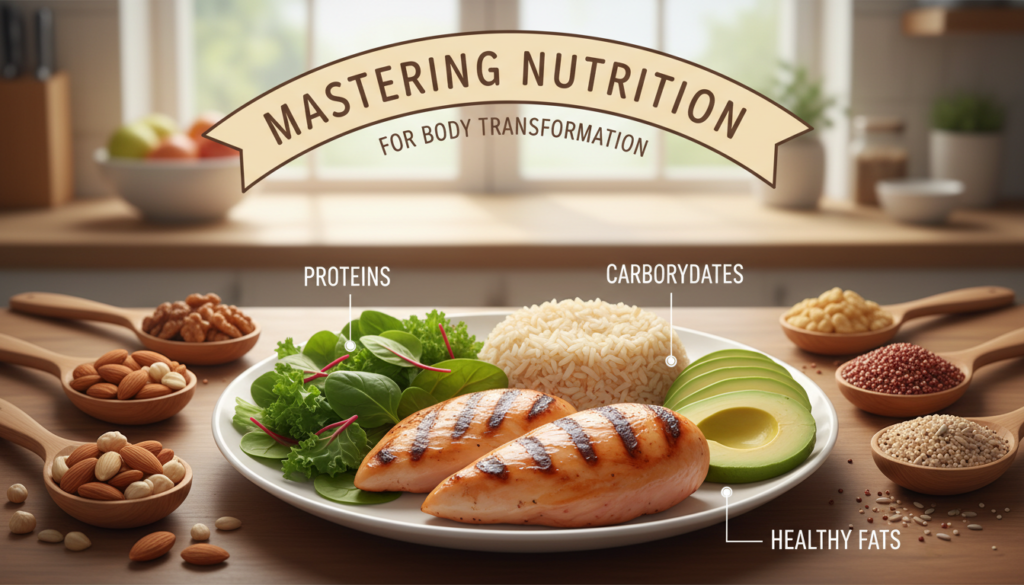
The Three Macronutrients Explained
Understanding the role of macronutrients is crucial for creating an effective nutrition plan. There are three primary macronutrients: protein, carbohydrates, and fats.
Protein: Your Muscle-Building Foundation
Protein is vital for muscle repair and growth. It provides the building blocks for muscle tissue, making it a critical component of your diet if you’re looking to build or maintain muscle mass.
Carbohydrates: Fuel for Performance
Carbohydrates are your body’s primary source of energy. They fuel your workouts and support your daily activities. Choosing complex carbohydrates, such as whole grains and vegetables, provides sustained energy and fiber.
Fats: Essential for Hormones and Health
Fats are often misunderstood but are crucial for hormone production and overall health. Healthy fats, found in foods like nuts, seeds, and avocados, support various bodily functions.
Determining Your Calorie Target
To achieve your body transformation goals, you need to determine your calorie target. This involves calculating your daily caloric needs based on your goals, whether it’s to lose fat, gain muscle, or maintain your current weight.
The Role of Micronutrients
While macronutrients are crucial, micronutrients (vitamins and minerals) play a significant role in overall health and body function. Ensuring you get a balanced mix of micronutrients supports your body’s ability to perform at its best.
By mastering these nutrition basics, you’ll be well on your way to achieving your body transformation goals. A balanced diet that includes the right mix of macronutrients and micronutrients, along with a well-planned calorie target, sets the stage for success.
5. Designing Your Custom Meal Plan
Tailoring your nutrition to fit your lifestyle is key to a successful body transformation. A well-crafted meal plan isn’t just about eating healthy; it’s about creating a sustainable nutrition strategy that supports your fitness goals and complements your daily life.
Meal Frequency That Works for Your Lifestyle
Determining the right meal frequency is crucial. Some people thrive on three meals a day, while others prefer smaller, more frequent meals. Experiment to find what works best for you, considering factors like your schedule, hunger levels, and energy needs.
Choosing Nutrient-Dense Whole Foods
Focus on incorporating nutrient-dense whole foods into your diet. These include vegetables, fruits, lean proteins, whole grains, and healthy fats. Such foods provide the necessary vitamins, minerals, and macronutrients for optimal body function and transformation.
Practical Meal Prep Tactics
Effective meal prep is the cornerstone of sticking to your meal plan. Here are some strategies to make it work:
- Plan your meals around your schedule.
- Shop smart for ingredients.
- Use containers to portion out meals.
Batch Cooking Strategies
Batch cooking can save time and ensure consistency. Cook large batches of a single ingredient like rice, quinoa, or grilled chicken, and use them throughout the week in different meals.
Healthy Snack Options
Having healthy snacks on hand is vital. Nuts, fruits, and carrot sticks with hummus make great snacks that are easy to prepare and pack.
By designing a meal plan that fits your lifestyle and preferences, you’ll be more likely to stick to it and achieve your body transformation goals.
6. Strength Training: The Foundation of Body Change
Strength training is a cornerstone of any successful body transformation journey. It’s not just about lifting weights; it’s about building a stronger, healthier you. By incorporating strength training into your fitness routine, you’ll be laying the groundwork for significant changes in your body composition, overall health, and physical performance.
Why Lifting Weights Transforms Your Body
Lifting weights is a powerful tool for body transformation. It helps build muscle mass, increase bone density, and enhance metabolic health. As you build muscle, your resting metabolic rate increases, helping your body burn more calories at rest. This, in turn, can lead to fat loss and a more toned physique.
Resistance training also improves body mechanics and reduces the risk of injury. By strengthening your muscles, you enhance your overall physical function, making daily activities easier and improving your athletic performance.
Essential Compound Movements
Compound movements are exercises that work multiple muscle groups at once. They are essential for building overall strength and muscle mass. Some of the most effective compound movements include:
Squats, Deadlifts, and Hip Hinges
Exercises like squats, deadlifts, and hip hinges are foundational movements that target multiple muscle groups, including your legs, glutes, and lower back. These exercises are crucial for building lower body strength and overall power.
Pressing and Pulling Exercises
Pressing exercises, such as the bench press and shoulder press, target your chest, shoulders, and triceps. Pulling exercises, like rows and pull-ups, work your back, shoulders, and arms. Together, these exercises help create a balanced upper body.
Structuring Your Weekly Training Split
A well-structured training split is crucial for ensuring that you’re targeting all major muscle groups effectively. A common approach is to divide your workouts into days that focus on specific muscle groups, such as chest and triceps one day, and back and biceps the next.
Proper Form and Technique
Regardless of the exercises you choose, proper form and technique are paramount. Poor form can lead to injury and reduce the effectiveness of your workouts. It’s essential to learn the correct technique for each exercise and to start with weights that allow you to maintain proper form.
7. Cardio Strategies for Maximum Fat Loss
Maximizing fat loss requires a thoughtful approach to cardio, combining various techniques for optimal results. Effective cardio strategies not only burn calories during the exercise but also enhance your overall fitness and metabolic health.
High-Intensity Interval Training Benefits
High-Intensity Interval Training (HIIT) involves short bursts of intense exercise followed by brief periods of rest. This method has been shown to be highly effective for fat loss due to its ability to boost metabolism and burn a high number of calories in a short amount of time.
Steady-State Cardio: When and How
Steady-state cardio involves maintaining a moderate intensity over a longer period. It’s beneficial for improving cardiovascular health and can be effective for fat loss when done correctly. Examples include jogging, cycling, or swimming at a consistent pace.
Finding the Right Cardio Balance
Balancing different types of cardio is key to avoiding plateaus and preventing overuse injuries. Combining HIIT with steady-state cardio can provide a well-rounded fitness regimen.
Frequency Recommendations
For optimal fat loss, aim for 3-5 cardio sessions per week, depending on your current fitness level and goals.
Intensity Guidelines
Adjust the intensity based on your fitness level. Beginners should start with lower intensity and gradually increase as their fitness improves.
8. Progressive Overload: The Secret to Continuous Results
The secret to sustained progress lies in understanding how your body adapts to exercise. As you work out, your muscles undergo various changes to handle the stress you’re putting them under. This adaptation is a natural process, but it can lead to stagnation if not addressed properly.
Progressive overload is the principle of gradually increasing the intensity of your workouts to challenge your muscles and avoid plateaus. It’s a crucial element in achieving continuous results in your fitness journey.
Understanding Muscle Adaptation
When you start a new exercise routine, your muscles adapt quickly to the new demands. However, as time passes, this adaptation slows down, and you may hit a plateau. Understanding that muscle adaptation is a continuous process helps in planning your training regimen.

Five Ways to Increase Training Difficulty
To implement progressive overload, you can try the following strategies:
- Increase the weight you lift
- Boost the number of repetitions or sets
- Improve the frequency of your workouts
- Decrease rest time between sets
- Enhance the difficulty of the exercises themselves
Breaking Through Strength Plateaus
When you hit a strength plateau, it’s essential to reassess your training plan. Sometimes, a change in routine or focusing on different muscle groups can help. Other times, it might be necessary to increase the intensity or volume of your workouts.
By understanding muscle adaptation and applying the principle of progressive overload, you can break through plateaus and continue making progress in your fitness journey.
9. Recovery: The Missing Piece of Your Transformation
Recovery is often the missing link that can make or break your body transformation efforts. While diet and exercise are crucial, your body’s ability to recover from the stress you place on it determines the effectiveness of your hard work.
Sleep Optimization for Muscle Growth
Sleep is a critical component of recovery. During sleep, your body repairs and grows muscle tissue, making it essential for muscle growth and strength gains. Aim for 7-9 hours of quality sleep per night to support your body transformation goals.
Active Recovery Methods That Work
Active recovery involves engaging in low-intensity activities that promote blood flow and aid in the removal of waste products from your muscles. This can include light cardio, yoga, or simply a leisurely walk.
Stretching and Mobility Work
Incorporating stretching and mobility exercises into your routine can improve flexibility and reduce muscle soreness. Focus on dynamic stretches before workouts and static stretches after.
Light Movement Days
On rest days, consider engaging in light movement such as walking or yoga to keep your body active without overexerting yourself.
Stress Management Techniques
High levels of stress can hinder your recovery and overall progress. Techniques such as meditation, deep breathing exercises, or journaling can help manage stress levels. Prioritizing stress management is as important as your diet and training regimen.
By focusing on recovery, you can enhance your body’s ability to adapt to the demands you’re placing on it, leading to better overall results in your transformation journey.
10. Hydration and Smart Supplementation
Proper hydration and smart supplementation are crucial elements that can make or break your body transformation journey. Adequate hydration is essential for physical performance and recovery, while the right supplements can support your nutrition and training efforts.
Meeting Your Daily Water Needs
Drinking enough water is vital for maintaining physical performance and overall health. The general recommendation is to drink at least eight 8-ounce glasses of water a day, but this can vary based on individual needs and activity levels.
Tips for Staying Hydrated:
- Drink water upon waking up
- Have a water bottle with you throughout the day
- Monitor your urine output to ensure it’s pale yellow
Supplements Worth Considering
While a balanced diet is paramount, certain supplements can be beneficial in supporting your body transformation goals.
Whey and Plant-Based Protein Powders
Protein powders are a convenient way to increase your protein intake, supporting muscle growth and recovery. Whey protein is absorbed quickly, making it ideal post-workout, while plant-based proteins offer a viable alternative for those with dietary restrictions.
Creatine for Strength and Size
Creatine is one of the most researched supplements, known for its ability to increase strength and muscle mass. It’s particularly effective when combined with resistance training.
Omega-3s for Recovery and Health
Omega-3 fatty acids support heart health and can aid in recovery by reducing inflammation. They’re found in fish oil supplements and can be beneficial for overall well-being.
What You Don’t Need to Buy
Not all supplements are created equal, and some are more marketing gimmick than necessity. Be cautious of products that promise unrealistic results or contain unproven ingredients.
Avoid supplements with:
- Unsubstantiated claims
- Proprietary blends without clear ingredient lists
- Excessive additives or fillers
11. Tracking Your Body Transformation Progress
Tracking your body transformation progress is essential for staying motivated and making necessary adjustments. While it’s easy to get caught up in the daily grind, monitoring your progress helps you understand what’s working and what areas need improvement.
Why the Scale Doesn’t Tell the Whole Story
Relying solely on the scale can be misleading. Weight fluctuations can be caused by various factors such as water retention, muscle gain, or hormonal changes. It’s crucial to look beyond the scale to get an accurate picture of your progress.
Accurate Measurement Techniques
There are several ways to measure progress beyond weight. These include:
- Body circumference tracking: Measuring around different parts of your body.
- Progress photography: Taking regular photos to track visual changes.
- Strength and performance benchmarks: Monitoring improvements in your workouts.
Body Circumference Tracking
Measuring your body circumference helps track changes in body composition. Use a flexible tape measure to record measurements around your waist, hips, and other relevant areas. Consistency is key; measure at the same time of day and under the same conditions.
Progress Photography Tips
Progress photos provide a visual record of your transformation. Take photos in the same lighting, from the same angles, and wearing similar clothing. Regular progress photos can be a powerful motivator.
Strength and Performance Benchmarks
Tracking your strength gains and workout performance is another effective way to measure progress. Keep a workout log to monitor improvements in the weights you lift, the number of reps you complete, or the time it takes to finish a workout.
Best Apps and Tools for Monitoring
There are numerous apps and tools available to help track your progress. Some popular options include:
- MyFitnessPal for tracking nutrition and calorie intake.
- Fitbit for monitoring daily activity and exercise.
- Progress photography apps like MyNetDiary.
By using a combination of these measurement techniques and tools, you can get a comprehensive view of your progress and stay motivated on your body transformation journey.
12. Overcoming Obstacles on Your Journey
Embarking on a body transformation journey is a significant decision, but it’s not without its challenges. As you progress, you may encounter various obstacles that can derail your efforts. Recognizing these hurdles and having strategies to overcome them is crucial for success.
One common obstacle is plateaus. When you stop seeing progress, it can be demotivating. To overcome this, revisit your workout routine and nutrition plan. Sometimes, a change in your strength training or cardio strategy can help you break through the plateau. Incorporating progressive overload by increasing weight or reps can also stimulate further progress.
Mental and emotional challenges are also significant obstacles. Developing a resilient mindset through techniques like meditation or journaling can help. Surrounding yourself with a supportive community or finding a workout buddy can provide the motivation needed to push through tough times.
Staying flexible and patient is key. Your body transformation journey is unique, and what works for someone else may not work for you. By being open to adjusting your approach and focusing on your goals, you can overcome obstacles and achieve lasting results.