
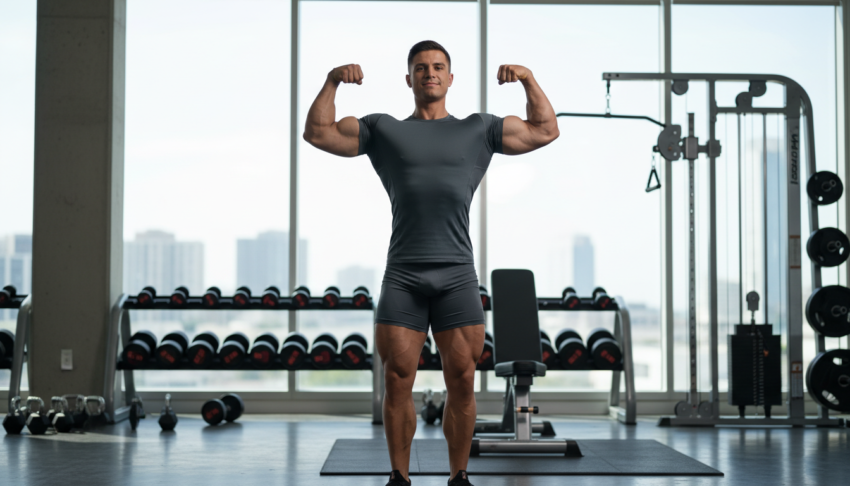
Starting a journey toward a better version of yourself is an exciting choice that changes your life. You deserve to feel strong, healthy, and confident in your skin every single day. A solid body transformation requires more than just luck; it needs a clear and dedicated plan.
Finding the right exercise routine helps you build lasting habits that stick for years. When you commit to a healthy fitness lifestyle, your energy levels naturally soar and your mood improves. You will soon see how small, daily changes lead to massive physical results.
Every workout you complete brings you one step closer to your personal health goals. Let’s explore how a balanced approach can change your daily routine for the better. You have the power to create lasting change starting right now.
Key Takeaways
- Consistency is the primary secret to seeing real progress over time.
- A mix of strength and cardio improves heart health and muscle tone.
- Setting realistic goals keeps your motivation high throughout the entire week.
- Proper nutrition supports your body after every intense training session.
- Rest days are essential for muscle recovery and preventing physical burnout.
- Tracking your results helps you stay focused on your long-term vision.
Understanding How Exercise Transforms Your Body
The science behind exercise reveals that it’s not just about burning calories, but about transforming your body’s functionality and appearance. When you engage in regular physical activity, your body undergoes a series of physiological changes that can lead to improved health, enhanced physical performance, and a more aesthetically pleasing physique.
The Science of Physical Transformation
Physical transformation through exercise is rooted in the body’s ability to adapt to the demands placed upon it. When you challenge your muscles through strength training, for instance, your body responds by increasing muscle mass and strength. This adaptive process is fundamental to achieving fitness goals, whether it’s building lean muscle or enhancing endurance.
Exercise also impacts your body’s metabolic rate, with regular physical activity helping to boost your metabolism and improve your body’s ability to burn fat. This is particularly true for high-intensity interval training (HIIT) and strength training exercises.
Setting Realistic Goals for Your Body Type
Understanding your body type is crucial for setting realistic fitness goals. Different body types (ectomorph, mesomorph, endomorph) respond differently to exercise and diet. For example, ectomorphs may find it challenging to gain weight, while endomorphs may struggle with fat loss.
- Identify your body type to tailor your fitness plan.
- Set specific, achievable goals based on your body type and fitness level.
- Consult with a fitness professional to create a personalized workout plan.
Timeline Expectations for Visible Results
The timeline for seeing visible results from exercise varies significantly among individuals, depending on factors such as starting fitness level, consistency of workout routine, and dietary habits. Generally, noticeable improvements can be expected within 6-12 weeks of consistent effort.
- Initial changes may be observed within the first few weeks, such as improved sleep and increased energy.
- Visible changes in body composition typically become apparent after 6-8 weeks.
- Significant transformations, such as substantial muscle gain or fat loss, may take several months to achieve.
Strength Training: Building Lean Muscle Mass
When it comes to transforming your body, few methods are as effective as incorporating strength training into your workout routine.
Strength training is a powerful tool for building lean muscle mass, enhancing overall physique, and improving health. By focusing on weightlifting and resistance exercises, individuals can achieve significant transformations in their body composition.
Why Lifting Weights Changes Everything
Lifting weights is not just about building muscle; it’s about transforming your body and enhancing your overall health. When you engage in strength training, you’re not only building lean muscle but also increasing your metabolism, improving bone density, and enhancing your mental well-being.
The benefits of weightlifting extend beyond physical appearance. Regular strength training can improve insulin sensitivity, reduce the risk of chronic diseases, and boost your overall quality of life.
Essential Compound Movements
Compound movements are exercises that work multiple muscle groups simultaneously. These movements are essential for building overall strength and muscle mass efficiently.
- They recruit more muscle fibers, leading to greater strength gains.
- They improve coordination and functional strength.
- They are time-efficient, allowing you to work multiple muscle groups in a single exercise.
The Squat: King of Lower Body Exercises
The squat is a fundamental exercise that targets the legs, glutes, and core. It’s considered the “king” of lower body exercises due to its effectiveness in building strength and muscle mass.
To perform a squat correctly, focus on keeping your back straight, lowering yourself down to a depth where your thighs are parallel to the ground, and pushing through your heels to return to standing.
Deadlifts for Total Body Power
Deadlifts are another compound exercise that work multiple muscle groups, including the back, legs, and core. They are excellent for building total body strength and power.
When performing deadlifts, maintain a neutral spine, engage your core, and lift the weight with your legs and hips.
Bench Press and Overhead Press Fundamentals
The bench press and overhead press are crucial exercises for building upper body strength. The bench press targets the chest, shoulders, and triceps, while the overhead press focuses on the shoulders and triceps.
To get the most out of these exercises, focus on proper form, including squeezing your shoulder blades together during the bench press and maintaining a stable core during the overhead press.
Progressive Overload: The Key to Continuous Growth
Progressive overload is the principle of gradually increasing the weight or resistance you’re lifting over time to continue making gains in strength and muscle mass.
This can be achieved by:
- Increasing the weight you lift.
- Increasing the number of repetitions or sets.
- Decreasing rest time between sets.
By incorporating progressive overload into your strength training routine, you can ensure continuous growth and avoid plateaus.
High-Intensity Interval Training for Maximum Fat Burn
For those seeking to maximize fat burn and boost their metabolism, High-Intensity Interval Training (HIIT) is a game-changer. This training method involves short bursts of high-intensity exercise followed by brief periods of rest or low-intensity exercise.
How HIIT Supercharges Your Metabolism
HIIT workouts are designed to push your body to its limits, causing a significant increase in your metabolic rate. This effect can last for hours after the workout is completed, a phenomenon known as excess post-exercise oxygen consumption (EPOC). As Dr. Bill Orban, a renowned exercise physiologist, once noted, “The greater the intensity, the greater the afterburn.”
Beginner-Friendly HIIT Protocols
Starting a HIIT regimen can be intimidating, but there are several beginner-friendly protocols to ease the transition. These include:
The 20-10 Tabata Method
This involves 20 seconds of all-out effort followed by 10 seconds of rest, repeated for 4-6 cycles. It’s a simple yet effective way to improve cardiovascular fitness and increase fat loss.
30-Second Sprint Intervals
Sprinting for 30 seconds at maximum intensity, followed by 30 seconds to 1 minute of rest, is another effective HIIT protocol. This can be done on a treadmill, bike, or even outdoors.
Pyramid Interval Training
Pyramid training involves gradually increasing the intensity or duration of work periods, followed by a decrease. For example, you might start with 20 seconds of intense exercise, then increase to 30, 40, and finally 50 seconds, before decreasing back down.
“The key to successful HIIT is not just the intensity, but also the consistency and patience to allow your body to adapt and recover.” –
Balancing Intensity with Recovery
While HIIT is incredibly effective, it’s crucial to balance high-intensity workouts with adequate recovery. Overtraining can lead to injury and burnout. Ensure you’re getting enough sleep, nutrition, and rest days to allow your body to recover and adapt.
- Allow at least 48 hours of recovery between HIIT sessions for the same muscle group.
- Incorporate low-intensity cardio or active recovery techniques like yoga or foam rolling on non-HIIT days.
- Listen to your body and adjust the intensity and frequency of your workouts based on how you feel.
Cardiovascular Exercise for Heart Health and Endurance
Regular cardiovascular exercise can significantly enhance your heart health and boost endurance. This form of exercise is not just about improving your heart’s health; it also plays a crucial role in increasing your overall stamina and reducing the risk of various cardiovascular diseases.

Beyond Fat Loss: Cardio’s Full Benefits
While many associate cardiovascular exercise with fat loss, its benefits extend far beyond weight management. Regular cardio workouts can improve heart health by strengthening the heart and increasing blood flow efficiency. It also enhances endurance, allowing you to perform daily tasks with more energy and less fatigue.
Cardiovascular exercise has been shown to reduce the risk of heart disease, improve circulation, and even help manage blood pressure. Moreover, it can boost mental health by reducing stress and anxiety levels.
Steady-State vs. Interval Cardio
There are primarily two types of cardio exercises: steady-state and interval training. Steady-state cardio involves maintaining a consistent pace over a longer period, such as jogging or cycling at a moderate intensity. On the other hand, interval training alternates between high-intensity bursts and lower-intensity recovery periods.
Both methods have their benefits. Steady-state cardio is excellent for building endurance and is generally easier on the joints when done at a moderate intensity. Interval training, however, is highly effective for improving cardiovascular health and burning calories in a shorter amount of time.
Low-Impact Options for Joint Protection
For individuals with joint issues or those who prefer lower-impact activities, there are several options available that can still provide an effective cardiovascular workout without putting excessive strain on the joints.
Swimming and Water Aerobics
Swimming and water aerobics are excellent low-impact cardio options. The buoyancy of water reduces the impact on joints, making these activities ideal for people with arthritis or other joint problems. They provide a full-body workout while being gentle on the body.
Cycling and Elliptical Training
Cycling, whether on a stationary bike or outdoors, and elliptical training are other low-impact options. These exercises are easy on the joints and can be adjusted to various intensity levels, making them suitable for a wide range of fitness levels.
Bodyweight Training: Your Portable Gym
Bodyweight training is a versatile and effective way to build strength without needing any equipment. This form of exercise utilizes your own body weight as resistance to challenge your muscles, improve flexibility, and enhance overall fitness. It’s an ideal solution for those who prefer working out at home, traveling frequently, or simply want to diversify their exercise routine.
Building Strength Without Equipment
The principle behind bodyweight training is simple: use your body’s weight to create resistance. This method engages multiple muscle groups simultaneously, promoting functional strength that translates to everyday activities. Compound exercises like push-ups, squats, and lunges are staples of bodyweight training, working multiple joints and muscles at once.
One of the key benefits of bodyweight exercises is their ability to be modified according to your fitness level. For instance, if you’re just starting out, you can begin with modified versions of exercises and gradually progress to more challenging variations as you build strength.
Mastering the Core Movements
To get the most out of bodyweight training, it’s essential to master the core movements. These exercises form the foundation of a comprehensive bodyweight workout routine.
Push-Up Progressions from Beginner to Advanced
Push-ups are a fundamental upper body exercise that targets the chest, shoulders, and triceps. Beginners can start with knee push-ups or wall push-ups and progress to traditional push-ups. Advanced practitioners can try diamond push-ups, decline push-ups, or plyometric push-ups for added challenge.
- Beginner: Knee push-ups or wall push-ups
- Intermediate: Traditional push-ups
- Advanced: Diamond push-ups, decline push-ups, or plyometric push-ups
Pull-Up and Row Variations
Pull-ups and rows are excellent for building back and arm strength. Beginners can start with assisted pull-ups or use resistance bands. As you get stronger, you can move on to unassisted pull-ups and various rowing exercises like inverted rows or renegade rows.
- Assisted pull-ups or resistance band pull-ups
- Unassisted pull-ups
- Rowing variations: inverted rows, renegade rows
Squat and Lunge Patterns
Squats and lunges are crucial for lower body strength. Bodyweight squats and lunges can be modified with different stances or tempos to increase difficulty. Advanced variations include single-leg squats and jump lunges.
Creating Challenging Bodyweight Circuits
To keep your workouts engaging and prevent plateaus, you can create bodyweight circuits. These involve performing a series of exercises in succession with minimal rest in between. For example, you could combine push-ups, squats, lunges, and planks into a circuit and repeat it several times.
When designing your circuit, consider your fitness goals and current level. Start with manageable exercises and gradually increase the intensity by adding more challenging variations or reducing rest time between exercises.
Functional Fitness Training for Daily Life
Functional training is about preparing your body for the movements you make every day, not just isolating muscles in the gym. This approach to fitness focuses on exercises that help you perform daily tasks more efficiently and safely.
Training Movements, Not Just Muscles
The core principle of functional fitness is to train movements rather than individual muscles. This method enhances your overall physical capability, making everyday activities easier. As noted by fitness expert, “Functional training is about creating a body that can handle real-life situations with ease and resilience.”
By focusing on movement patterns, you improve your coordination, balance, and overall physical fitness. This holistic approach to exercise ensures that your workouts are relevant and beneficial to your daily life.
Essential Functional Movement Patterns
Functional fitness encompasses a variety of movement patterns that are crucial for daily activities. These include pushing, pulling, rotational, and anti-rotational movements.
Pushing and Pulling Exercises
Pushing exercises, such as push-ups and squats, work multiple muscle groups simultaneously, enhancing your ability to perform tasks like pushing a heavy door or lifting groceries. Pulling exercises, like rows and pull-ups, are equally important for activities such as pulling yourself up or carrying heavy bags.
Rotational and Anti-Rotational Core Work
Rotational movements, such as twisting and turning, are common in daily life. Exercises that strengthen your core and improve rotational flexibility are vital. Anti-rotational exercises help stabilize your core, preventing unnecessary strain during activities.
Integrating Functional Training into Your Routine
To incorporate functional training into your workout routine, start by identifying exercises that mimic daily activities. For example, squats and lunges can improve your ability to stand up from a seated position, while deadlifts can enhance your lifting capability.
As “The key to successful functional training is consistency and progressive overload.” Gradually increase the intensity of your workouts by adding weight, reps, or sets over time to continue making progress.
By integrating functional fitness into your lifestyle, you’ll notice improvements in your daily life activities, from carrying groceries to playing with your kids. It’s about making your body more capable and resilient.
Flexibility and Mobility: The Missing Piece
To unlock your full potential in fitness, it’s essential to incorporate flexibility and mobility exercises into your routine. While strength training and cardio are crucial components of a well-rounded fitness regimen, flexibility, and mobility are equally important for achieving overall fitness and facilitating body transformation.
Flexibility refers to the range of motion in a joint or series of joints, while mobility is the ability to move those joints through a range of motion actively. Both are critical for maintaining proper form during exercise, preventing injuries, and enhancing overall physical performance.
Why Flexible Bodies Transform Faster
A flexible body is better equipped to handle the demands of various exercises, allowing for more effective workouts and faster progress. When your muscles and joints are flexible, you can perform exercises with proper form, targeting the intended muscle groups more effectively.
- Improved range of motion allows for more comprehensive workouts.
- Enhanced flexibility reduces the risk of injury.
- Better posture and alignment improve overall physical performance.
Dynamic Stretching for Workout Preparation
Dynamic stretching involves moving your joints through a range of motion while keeping your muscles active. This type of stretching is ideal for warming up before a workout, as it prepares your muscles for the upcoming exercise and can improve performance.
Examples of dynamic stretches include leg swings, arm circles, and hip rotations. Incorporating dynamic stretching into your pre-workout routine can enhance your flexibility and mobility, making your workouts more effective.
Static Stretching for Recovery and Range of Motion
Static stretching involves holding a stretch for a period, typically 15-30 seconds. This type of stretching is best used after a workout or as a standalone session to improve flexibility and aid in recovery.
Static stretches can help lengthen the muscles, improve range of motion, and reduce muscle soreness after exercise. Examples include hamstring stretches, quadriceps stretches, and chest stretches.
Incorporating Yoga and Pilates
Practices like yoga and Pilates can significantly enhance flexibility and mobility. These exercises not only improve range of motion but also strengthen the core, improve posture, and enhance overall physical fitness.
“Yoga is the journey of the self, through the self, to the self.” – The Bhagavad Gita
Incorporating yoga or Pilates into your fitness routine can provide a well-rounded approach to flexibility and mobility, complementing your strength training and cardio workouts.
Designing Your Perfect Workout Schedule
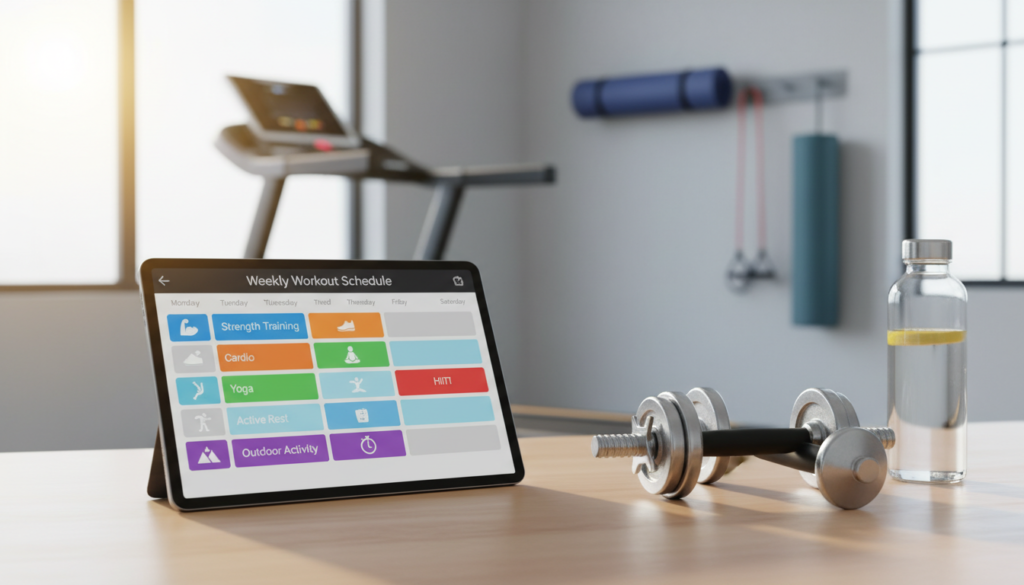
Designing an effective workout schedule requires a thoughtful approach. It’s not just about deciding to exercise; it’s about creating a plan that fits your lifestyle, goals, and current fitness level. A well-crafted workout schedule helps you stay on track, ensures you’re making progressive gains, and reduces the risk of overtraining or injury.
Assessing Your Starting Point
Before you can create an effective workout schedule, you need to understand where you’re starting from. This involves assessing your current fitness level, including your strength, endurance, and flexibility.
Consider factors such as your health status, any physical limitations you may have, and your availability for working out. Being honest about your starting point allows you to set realistic goals and design a schedule that’s both challenging and achievable.
Creating a Balanced Weekly Training Split
A balanced weekly training split is crucial for ensuring that you’re targeting all major muscle groups and not overtraining any one area. There are several ways to structure your weekly workouts, and the best approach depends on your goals, experience level, and available training time.
Full-Body Workout Plans
Full-body workout plans involve training all major muscle groups in a single session. This approach is great for beginners because it ensures that you’re working on overall fitness and strength.
Full-body workouts can be done 2-3 times per week, allowing for adequate recovery time between sessions.
Upper-Lower Split Routines
Upper-lower split routines divide your workouts into upper body and lower body days. This allows for more focused training on specific muscle groups and can be particularly effective for those looking to increase strength or muscle mass in specific areas.
Typically, this involves four days of training per week, with two days for upper body and two for lower body.
Push-Pull-Legs Organization
The push-pull-legs (PPL) split is a more advanced training split that divides workouts into three categories: pushing muscles (chest, shoulders, triceps), pulling muscles (back, biceps), and legs (quads, hamstrings, calves).
This split is popular among those looking to maximize muscle growth and strength. It usually involves training six days per week, with each muscle group being trained twice.
Adjusting Your Plan as You Progress
As you get more experienced and your body adapts to your workout routine, it’s essential to adjust your plan to continue making gains.
This might involve increasing the intensity of your workouts, changing your training split, or incorporating new exercises to challenge your muscles in different ways.
Regularly reviewing and adjusting your workout schedule ensures that you continue to make progress toward your fitness goals.
Fueling Your Workout for Better Results
Achieving your fitness goals requires more than just a solid workout plan; it demands a comprehensive approach to nutrition that fuels your body effectively. The right nutritional strategy can significantly enhance your performance during exercise and aid in recovery afterward.
Pre-Workout Nutrition Timing and Choices
Consuming the right nutrients before a workout is crucial for optimizing performance. A balanced meal or snack that includes carbohydrates and protein about 1-3 hours before exercise can provide the necessary energy and support muscle function. Complex carbohydrates such as whole grains, fruits, and vegetables are excellent choices because they release energy slowly. Including a source of lean protein like chicken, fish, or tofu can help maintain muscle integrity during the workout.
For those with limited time, a smaller snack closer to the workout time can be beneficial. Options like a banana with almond butter or a protein shake can provide a quick energy boost. It’s essential to avoid heavy meals too close to workout time to prevent discomfort.
Post-Workout Recovery Meals
After a workout, your body is in a state of recovery, needing nutrients to repair and rebuild muscle tissue. Consuming a mix of carbohydrates and protein within 30-60 minutes post-exercise can significantly aid in this process. Carbohydrates help replenish glycogen stores, while protein provides the amino acids necessary for muscle repair.
A post-workout meal or shake that includes a ratio of 2:1 or 3:1 carbohydrates to protein is often recommended. Examples include a smoothie with berries, Greek yogurt, and protein powder, or a meal of grilled chicken with quinoa and steamed vegetables.
Daily Protein Needs for Muscle Building
Protein is a critical nutrient for muscle building and repair. The daily protein intake required for muscle growth varies based on factors such as body weight and activity level. Generally, 1.2 to 1.6 grams of protein per kilogram of body weight is recommended for individuals engaged in regular strength training.
Distributing protein intake across multiple meals throughout the day can help maintain a positive nitrogen balance, supporting muscle growth. Good sources of protein include lean meats, fish, eggs, dairy products, and plant-based options like beans, lentils, and tofu.
Hydration Strategies Before, During, and After Exercise
Adequate hydration is essential for physical performance and recovery. Drinking water before, during, and after exercise helps regulate body temperature and transport nutrients and oxygen to cells. Aim to drink at least 8-10 glasses of water per day, adjusting based on the intensity and duration of your workouts.
During prolonged exercise, consider consuming a sports drink that contains electrolytes to replace lost salts. Monitoring urine color can also be a simple way to gauge hydration status; it should be pale yellow.
Recovery: When Transformation Actually Happens
Recovery is the unsung hero of fitness, playing a crucial role in your body’s transformation. While exercise is essential for building strength and endurance, it’s during recovery that your body repairs and grows.
Understanding the Rest and Repair Process is vital. When you exercise, you cause micro-tears in your muscles. It’s during rest that your body repairs these tears, making your muscles stronger.
Understanding the Rest and Repair Process
The rest and repair process is a complex biological mechanism. It involves various cellular and hormonal changes that help in muscle repair and growth. Adequate rest is crucial for this process to occur effectively.
- Adequate sleep allows your body to release growth hormones.
- Nutrition provides the necessary building blocks for repair.
- Rest days give your muscles time to recover.
Strategic Rest Days vs. Active Recovery
Not all rest days are created equal. Strategic rest days involve complete rest, while active recovery involves low-intensity activities like yoga or light cardio.
Active recovery can help promote blood flow, which aids in the repair process. However, it’s essential to balance between rest and active recovery based on your body’s needs.
Sleep Quality and Muscle Growth Connection
Sleep quality significantly impacts muscle growth and recovery. Poor sleep can disrupt hormonal balances, leading to decreased growth hormone levels, which are crucial for muscle repair.
- Ensure you get 7-9 hours of sleep per night.
- Maintain a consistent sleep schedule.
- Create a sleep-conducive environment.
Recognizing and Preventing Overtraining
Overtraining occurs when you don’t allow your body sufficient time to recover between workouts. It can lead to fatigue, decreased performance, and increased risk of injury.
To prevent overtraining, listen to your body and adjust your workout schedule as needed. Incorporating rest days and active recovery can help prevent overtraining.
Avoiding Common Training Pitfalls
Achieving a successful workout routine requires more than just enthusiasm; it demands a well-informed approach that avoids common training pitfalls. As you progress on your fitness journey, being aware of potential obstacles can significantly enhance your results and overall experience.
Form Over Ego: Preventing Injury
One of the most critical aspects of a safe and effective workout is maintaining proper form. Sacrificing form for heavier weights or more reps can lead to serious injuries that not only set back your progress but also have long-term health implications. It’s essential to understand that proper form is paramount, and it’s better to lift lighter weights correctly than to risk injury by lifting heavier weights improperly.
The Danger of Doing Too Much Too Fast
Overtraining is another common pitfall that can derail your fitness goals. Increasing the intensity or volume of your workouts too quickly can lead to burnout, decreased performance, and increased risk of injury. It’s crucial to gradually progress your workouts, allowing your body adequate time to adapt and recover.
Why Skipping Warm-Ups Sabotages Results
Warm-ups are often overlooked but are a vital component of a successful workout routine. Skipping warm-ups can lead to reduced performance and increased risk of injury. A proper warm-up prepares your muscles for the upcoming exercise, enhancing your overall performance and reducing the risk of strains and pulls.
Consistency Beats Perfection Every Time
While having a perfect workout plan is ideal, it’s the consistency that ultimately drives long-term results. It’s more beneficial to have a consistent workout routine that you can maintain over time rather than an intense, perfect routine that you can only follow sporadically. Consistency helps in building habits and ensures progressive overload and recovery, which are key to continuous improvement.
By being aware of these common training pitfalls and taking steps to avoid them, you can create a safer, more effective workout routine that yields lasting results.
Maintaining Motivation for Long-Term Success
Staying motivated is the linchpin of any successful fitness journey, requiring a multifaceted approach that incorporates goal-setting, support systems, and progress tracking. As you work towards transforming your body, it’s essential to have strategies in place that keep you motivated and engaged over the long term.
Goal-Setting Strategies That Work
Effective goal-setting is more than just deciding on a specific outcome; it’s about creating a roadmap to achieve it. Setting SMART (Specific, Measurable, Achievable, Relevant, Time-bound) goals is a widely recognized strategy that helps in maintaining focus and direction. For instance, instead of saying “I want to be healthier,” a SMART goal would be “I will reduce my body fat percentage to 20% within the next 6 months by working out 3 times a week and eating a balanced diet.”
As James Clear, author of “Atomic Habits,” suggests, “You do not rise to the level of your goals. You fall to the level of your systems.” This emphasizes the importance of building systems and processes that support your goals, rather than just focusing on the end result.
Building Your Support System
Having a support system can significantly enhance your motivation. This could be in the form of a workout buddy, a fitness community, or even online forums and social media groups dedicated to fitness. A support system provides encouragement, accountability, and motivation, helping you to push through challenging times.
- Join local fitness classes or gyms to meet like-minded individuals.
- Engage with online fitness communities on social media platforms.
- Share your fitness goals with friends and family to gain their support.
Tracking Progress Beyond the Scale
While the scale can be a useful tool for tracking weight loss, it’s not the only metric for measuring progress. Diversifying how you track progress can provide a more comprehensive view of your achievements and help maintain motivation.
Taking Progress Photos and Measurements
Regular progress photos and body measurements can reveal changes in your body composition that might not be reflected on the scale. These visual cues can be powerful motivators, showing you the tangible results of your hard work.
Celebrating Strength and Performance Gains
Tracking improvements in strength and performance is another effective way to measure progress. “The only bad workout is the one that didn’t happen,” as famously said by Joe Cirulli. Celebrating small victories, like being able to lift heavier weights or complete a challenging workout, can boost your motivation and reinforce positive behaviors.
Pushing Through Plateaus
Plateaus are an inevitable part of any fitness journey. When progress seems to stall, it’s easy to become discouraged. However, plateaus are not failures; they’re opportunities to reassess and adjust your strategy. This might involve changing your workout routine, adjusting your nutrition plan, or seeking guidance from a fitness professional.
By adopting a flexible mindset and being willing to adapt, you can overcome plateaus and continue making progress towards your goals.
Conclusion
Embarking on a fitness journey is a significant step towards a healthier, more vibrant you. As we’ve explored, a comprehensive approach to fitness is key to achieving lasting transformation. This includes a balanced mix of strength training to build lean muscle, cardiovascular exercise for heart health, flexibility and mobility work to enhance range of motion, and adequate recovery to allow your body to repair and grow.
Proper nutrition plays a crucial role in fueling your workouts and supporting muscle growth and recovery. Staying motivated and tracking your progress are equally important for long-term success. As you continue on your fitness journey, remember that transformation is a gradual process that requires patience, dedication, and persistence.
By incorporating the strategies outlined in this article, you’re well on your way to achieving your fitness goals. Stay committed to your workout routine, listen to your body, and celebrate your progress along the way. Your fitness journey is unique to you, and every step forward is a step towards a stronger, healthier you.
As you reach the end of this workout conclusion, we encourage you to take the first step or continue on your path to transformation. With the right mindset and support, you can achieve the body and life you’ve always desired.